Why CFDs Trading on Tech Indices Suits Korean Investors
Korea has more than a casual connection with the technology industry. The nation’s modern economy is built on semiconductor production, consumer electronics, and telecommunications equipment, and that history has taught Korean investors that technology firms are sensitive to market cycles. When it comes to forming views on global tech indices, Korean traders may be better positioned than many other retail participants to assess sector fundamentals, not through any privileged information, but because of how deeply the industry is embedded in their professional and daily lives.
The Nasdaq 100 is a benchmark that resonates with most Korean retail investors. It comprises names that consumers, engineers, and analysts worldwide encounter daily: semiconductor manufacturers that directly influence components produced in Korea, platform companies whose advertising relationships affect Korean media businesses, and hardware makers that rely on Korean industrial zones within their supply chains. For participants without that professional or cultural connection to the index’s constituents, tracking the benchmark can feel abstract in a way it simply does not for Korean traders.
For participants with a directional view on the sector, CFDs trading on tech indices offers a meaningful advantage that equity trading does not. The ability to take short positions during earnings seasons or periods of sector stress is a genuine capability for participants who hold views on sector weakness but lack the account structure to express them through options or direct shorting in the underlying market. Korean traders who watched semiconductor stocks reprice rapidly during supply chain disruptions found index CFDs to be a direct instrument for expressing directional conviction without the complexity of individual stock selection.
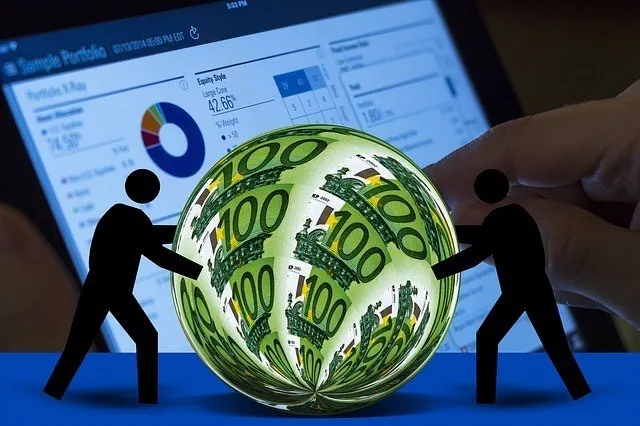
Image Source: Pixabay
The leverage dimension requires careful handling, and Korean participants with access to strong community education tend to approach it more systematically than newcomers in less connected retail markets. Placing stops relative to account equity, sizing positions based on index volatility rather than round numbers, and understanding how the Nasdaq behaves during the US session compared to the Asian session are all topics discussed regularly in Korean trading communities. That accumulated knowledge raises the effective entry standard for engaging with the product.
Timing also works in favor of Korean participants engaging with this instrument. The Nasdaq’s most active period aligns with Korean evening hours, allowing traders to assess where positions stand and act on developments after the Korean working day has ended. This removes the conflict between peak volatility and business hours that affects retail participants in markets where the most active session falls during the working day. A Korean trader monitoring Federal Reserve commentary or major tech earnings from home at 10 in the evening is operating in sync with the market rather than around it.
These factors combine to make tech index CFDs a coherent match for Korean retail traders across sector familiarity, community knowledge, and timezone alignment. Other instruments carry their own advantages, and experienced traders typically diversify across them over time. Nevertheless, for traders just starting to grasp the concept of CFDs trading, it is more worthwhile to begin with an instrument that is associated with a familiar economic environment rather than venturing into an unknown area without the context.